

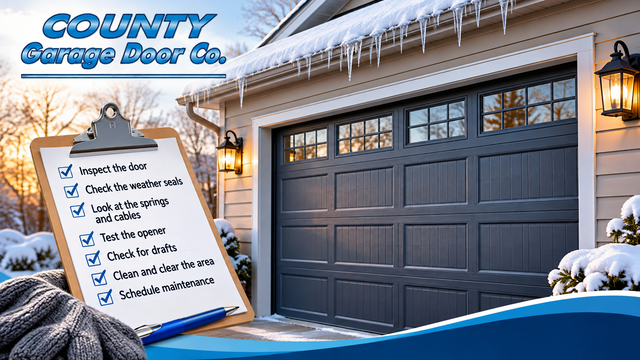
Cold weather has a way of exposing little problems around the house.
Your garage door is no exception.
A door that seemed fine all summer may suddenly start making more noise, moving more slowly, or letting in cold air once temperatures drop. Since your garage door is one of the largest moving parts of your home, a little attention before winter can help prevent an inconvenient problem later.
Here are seven things worth checking before the cold really settles in.
1. Listen for New Noises
A garage door shouldn’t sound like it’s struggling every time it opens.
Grinding, squeaking, popping, or banging noises can be signs that something needs attention. Sometimes it may be a simple lubrication issue. Other times, the sound could point to worn rollers, loose hardware, or a spring problem.
The key is noticing when the door sounds different than it normally does.
2. Check the Weather Seal
Look at the rubber seal along the bottom of your garage door.
Is it cracked, flattened, torn, or missing in places?
A damaged weather seal can allow cold air, moisture, leaves, and debris to enter the garage. Replacing a worn seal is a fairly simple way to make the space feel more protected during the winter months.
3. Watch How the Door Moves
Open and close your garage door and pay attention to the movement.
Does it move smoothly, or does it jerk, hesitate, or look uneven?
A door that moves unevenly may have an issue with the tracks, rollers, cables, or springs. Those problems usually don’t improve on their own, and colder weather can make an already struggling system more noticeable.
4. Look at the Springs
Garage door springs do a lot of the heavy lifting.
Cold temperatures can be especially tough on metal parts, and older springs may be more likely to fail when temperatures drop.
You don’t need to touch or adjust the springs yourself. In fact, garage door springs are under significant tension and should be handled by a trained professional.
Just take a look. Should you notice a broken spring, unusual gap, or something that doesn’t look right, call for service.
5. Test the Safety Features
Your garage door opener should have safety sensors near the bottom of the door.
Place an object in the door’s path and make sure the door reverses as expected.
You should also check that the sensors are clean and properly aligned.
These safety features matter all year long, but winter is a good reminder to make sure everything is working correctly.
6. Check the Tracks and Hardware
Look at the tracks on both sides of the garage door.
Are they clean and free of debris? Do you see any bent areas, loose brackets, or hardware that looks out of place?
Small problems can affect how smoothly the door operates.
You may also notice loose bolts or hinges that need attention after months of regular use.
7. Think About the Age of Your Garage Door
Sometimes maintenance is enough.
Other times, an older garage door may simply be showing its age.
Worn panels, poor insulation, repeated repairs, damaged seals, or an outdated opener can all be signs that it may be time to start thinking about replacement.
A new garage door can improve appearance, operation, and comfort — especially when the garage is attached to the home.
Get Ahead of Winter Garage Door Problems
The best time to deal with a garage door problem is before it becomes an emergency.
A quick check now can help you spot signs of wear before freezing temperatures, snow, and winter weather make things more difficult.
Should your garage door be making unusual noises, moving unevenly, or simply not working the way it should, County Garage Door Co. can help.
From repairs and service to replacement doors, their team can help make sure your garage door is ready for the season ahead.
Call County Garage Door Co. and take care of the problem before winter takes care of it for you.